You’re More Than One Number. Measure All Twenty.
A free, science-backed assessment that maps your strengths and blind spots across 20 dimensions of life in under five minutes.
Wellbeing Is More Than Mental Health
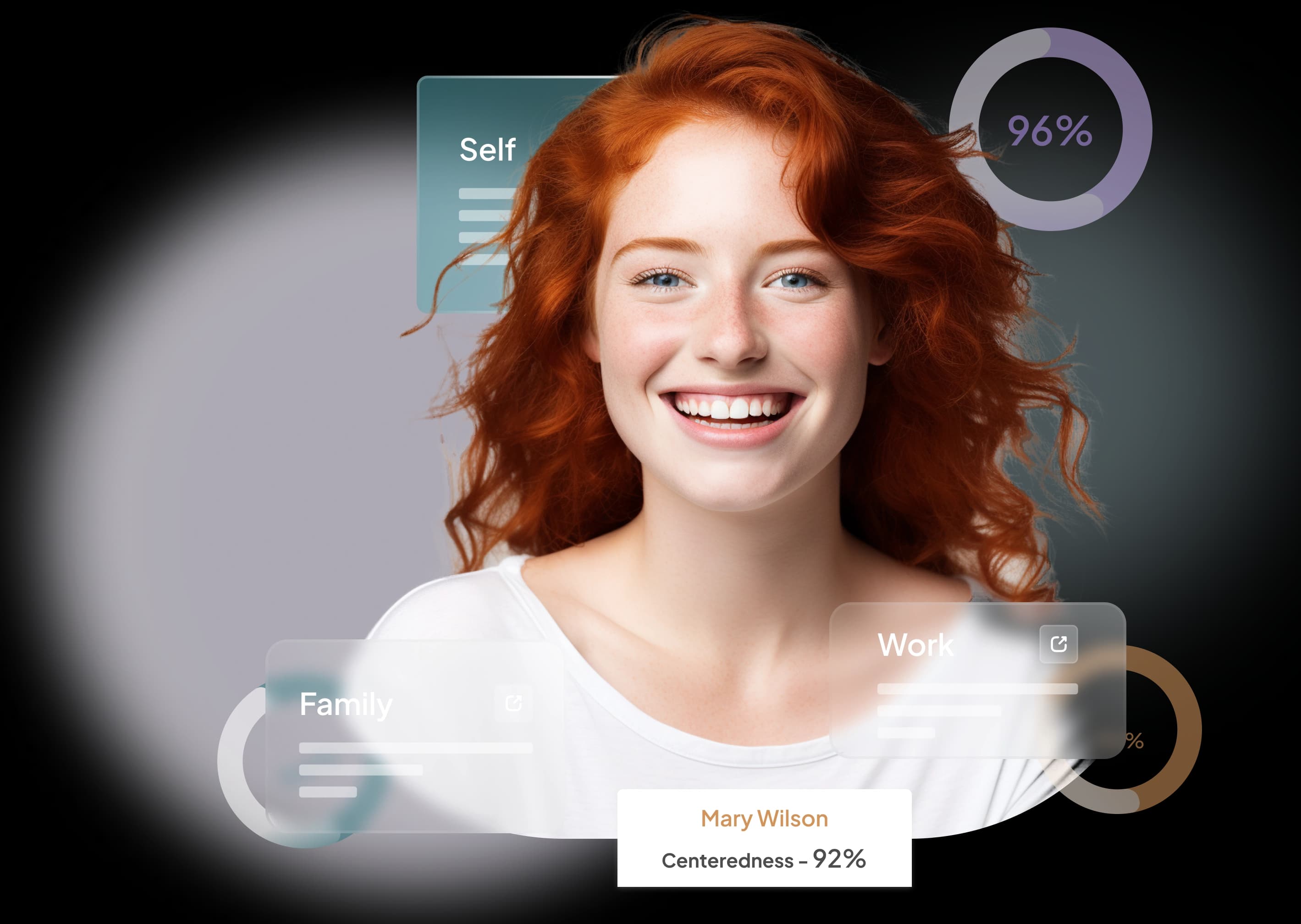
Most tools measure one slice: mood, stress, mindset. But your life doesn’t operate in isolation. Your Self, Family, Relationship, Work, and Community form an interconnected system where growth in one sphere creates momentum across all the others. MAP measures twenty dimensions across all five. Because a stroll in the park isn’t a wellbeing strategy, but understanding the full picture is.
Three Steps to a Clearer Picture
Thousands of people across 38 countries have already taken MAP. Here’s what happens when you take yours.
Your 20-Dimension Profile
Where do you thrive? Where are you stretched thin? MAP scores you across 20 dimensions in five life spheres and reveals the patterns you can’t see from the inside.
Your Highest-Impact Focus
Not every change carries the same weight. MAP’s Centeredness Intelligence identifies the dimension where improvement is likely to create the biggest ripple effect across your entire wellbeing. Focused effort, maximum return.
Your Evidence-Based Action Plan
No guesswork. MAP draws from nearly 50 peer-reviewed interventions and 40 wellbeing milestones to surface the specific steps that match your profile, your scores, and your life right now.
Better Wellbeing Is Deeper Than Feeling Good
It’s about becoming who you are capable of being, across every sphere of your life.
Quick fixes offer temporary relief. A meditation app, a long weekend, a new routine. They address symptoms, not the system. True wellbeing requires seeing how all the parts of your life connect and influence each other.
Centeredness Theory takes a different approach. Your five life spheres (Self, Family, Relationship, Work, and Community) operate as an interconnected system. When one sphere shifts, the others feel it. That’s why aligning your life with who you really are requires seeing the whole picture first.
What Happens When You Take MAP
Sixty science-backed questions. A complete picture of your wellbeing. And a clear path forward.
How MAP Works
Built by scientists in neuroscience, psychology, and data science, MAP uses a 60-item psychometric scale validated in partnership with Neuroscience Research Australia. In under five minutes, it maps your wellbeing across 20 dimensions, then gives you the tools to act on what it finds.
See the Full Picture
Where are your strengths? Where are your blind spots?
Receive detailed scores across all five life spheres (Self, Family, Relationship, Work, and Community) and understand how they connect and influence each other.
Find Your Leverage Point
Your personalized report identifies the dimensions where focused effort creates the greatest ripple effect.
Because your spheres form an interconnected system, one well-placed shift can improve your overall wellbeing faster than scattering effort across all twenty.
Build and Track Progress
Access nearly 50 evidence-based interventions matched to your profile, grounded in three core mechanisms: reframing stress, mindfulness and reflection, and meaningful goals.
Track your growth through 40 wellbeing milestones and repeat assessments that show how your profile evolves over time.
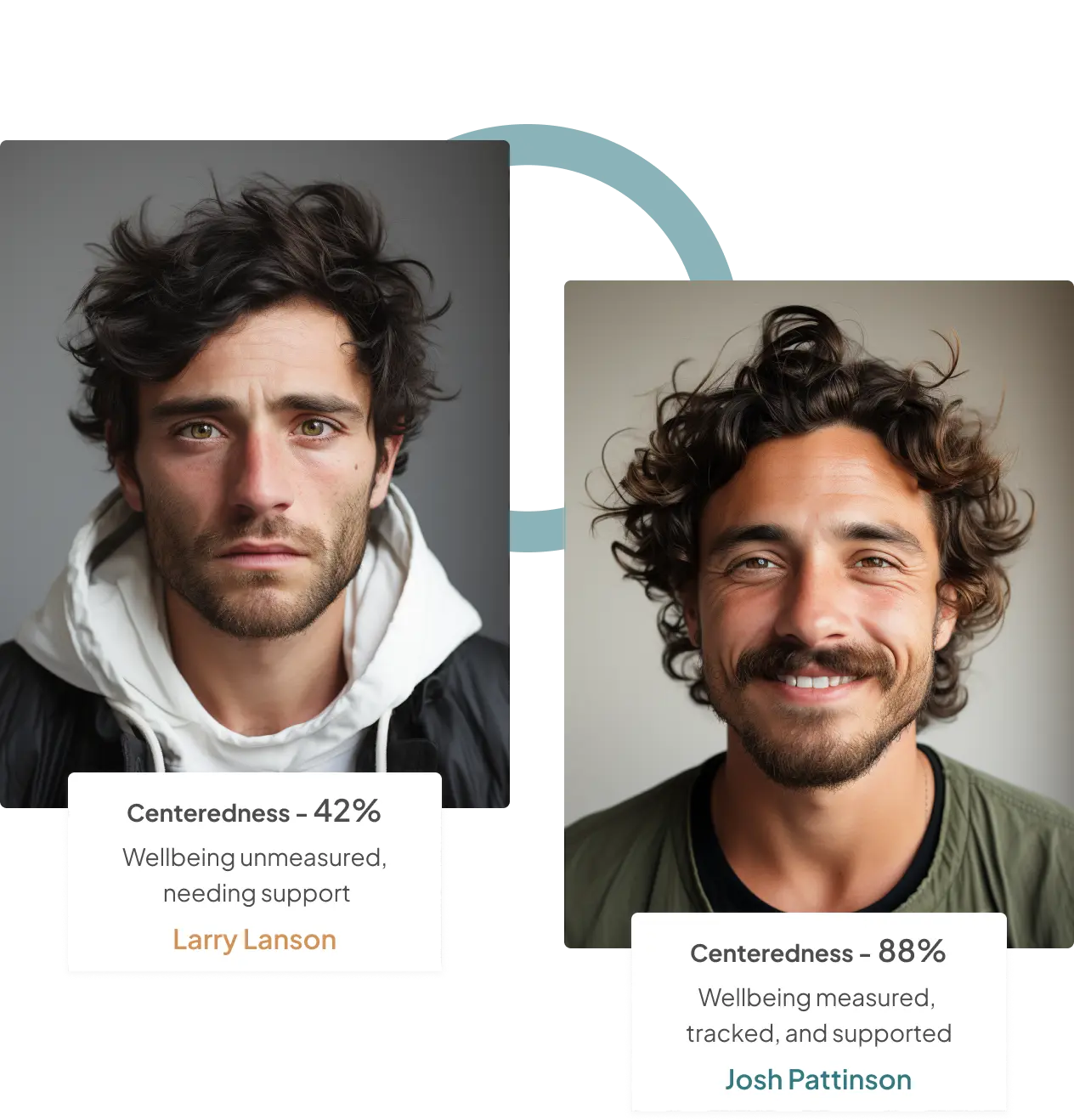
Real People. Real Profiles.

Five Minutes. Twenty Dimensions. Zero Cost.
You don’t have to chase happiness. You just need to create the conditions where it can grow. Start with five minutes of honest reflection.
0101
Reflect on 60 Questions
Be honest. There are no right answers. The more truthful you are, the more useful your profile becomes.
0202
See Your Centeredness Score
Receive instant, detailed feedback across 20 dimensions and five life spheres, and see how balanced your life really is.
0303
Act on What Matters Most
Get evidence-based interventions matched to your scores, starting with the changes that create the biggest ripple effect.
Latest Articles
Check out our latest insights on MAP and centeredness theory.
FAQ
Who is the wellbeing assessment for?
MAP is for anyone who suspects their life has more potential than they're currently reaching, whether you're navigating a difficult transition or already thriving and looking for your next area of growth.
Because wellbeing isn't binary. It's a system with twenty moving parts, and most of us have never seen the full picture. No prior knowledge, no special preparation. Just five minutes and honest answers.
How long does MAP take to complete?
The MAP assessment takes only five minutes. It includes 60 questions that measure your wellbeing across 20 dimensions in five life spheres. Once complete, you'll receive instant access to...
- your Centeredness Score and 20-dimension profile;
- your highest-impact focus areas;
- nearly 50 evidence-based interventions and 40 wellbeing milestones to guide your next steps.
How long will it take for me to improve my wellbeing?
Everyone's path is different, but MAP is designed to accelerate yours. Instead of spreading effort across every area of your life, MAP identifies your leverage points: the dimensions where focused improvement creates the greatest ripple effect across your entire wellbeing.
Because your five life spheres form an interconnected system, a single well-placed shift can set positive change in motion across all of them.
The sooner you begin, the sooner the system starts working in your favor.
Is MAP free?
Yes. 100% free, everywhere. No trial period, no credit card, no payment required, ever.
MAP is funded through enterprise partnerships so that cost is never a barrier to self-knowledge. We believe wellbeing science should be accessible to everyone, regardless of where you live or what you earn.
Is MAP backed by science?
Yes. MAP was built by a science team spanning neuroscience, psychology, and data science. In 2018, they published a paper in the journal Frontiers in Psychology introducing Centeredness Theory, the framework that underpins MAP's 20-dimensional assessment.
The assessment uses a 60-item psychometric scale validated in partnership with Neuroscience Research Australia (NeuRA), with respondents from 38 countries. It is listed by the American Psychological Association and grounded in three core mechanisms: reframing stress, mindfulness and reflection, and meaningful goals.
Learn moreWhat kind of personal wellbeing assessment is MAP?
MAP measures 20 dimensions of wellbeing organized across five life spheres:
- Self: Adaptability, Awareness, Contentment, Inspiration
- Family: Care, Communication, Participation, Receptiveness
- Relationship: Enrichment, Attentiveness, Connection, Understanding
- Work: Innovation, Accountability, Engagement, Supportiveness
- Community: Confidence, Sympathy, Empathy, Sensitivity
Your overall Centeredness Score acts as a meta-measure, reflecting how aligned and balanced your life is across all five spheres.
Unlike assessments that focus on a single slice (mood, stress, or mindset), MAP captures the full system. Because your spheres are interconnected, a shift in one creates ripple effects across the others.
Learn moreWhat is a wellness assessment, and why is MAP different?
Most wellness assessments draw from frameworks like Maslow's hierarchy of needs, measuring whether basic needs are met and where you fall on a linear scale from surviving to thriving.
MAP takes a fundamentally different approach. Built on Centeredness Theory, it treats your wellbeing not as a ladder but as an interconnected system of five life spheres. Rather than asking "how high have you climbed?", MAP asks "how aligned is your life with who you really are?"
This means MAP doesn't just identify where you're struggling. It reveals how your spheres influence each other, where focused effort creates the greatest ripple effect, and what specific, evidence-based steps will move your entire system forward.
Learn moreIs my data private and secure?
Yes. MAP does not sell, share, or monetize your personal data. Your responses are used solely to generate your wellbeing profile. Your data is protected with industry-standard encryption.
Is MAP a substitute for therapy or professional help?
No. MAP is a self-awareness and personal development tool, not a clinical or diagnostic instrument. If you are experiencing mental health difficulties, please consult a qualified professional. MAP can complement professional support by helping you see the bigger picture of your wellbeing, but it is not a replacement for therapy, counseling, or medical advice.