
IN THIS ARTICLE
Better Wellbeing: Why Everything You've Tried Hasn't Worked (And What Actually Will)
Written by
Main Takeaways
- Centeredness Theory shifts the conversation from fixing what’s wrong to building what’s right.
- Instead of seeing wellbeing as a goal to reach, see it as a system to strengthen with your highest vision guiding the improvements.
- You don’t have to chase happiness—you just need to create the conditions where it can grow.
Why Doesn't Traditional Wellbeing Advice Work?
Raise your hand if this sounds familiar:
You drink more water. You commit to journaling five minutes a day. You try meditating before bed. For a while, these habits bring small bursts of satisfaction. But eventually, the impact fizzles. You’re still stressed, still restless, still wondering why life doesn’t feel quite right.
Or maybe you’re somewhere else entirely. Maybe the idea of morning routines or meditation apps feels like a joke because you’re just trying to survive. You’re running on fumes, overwhelmed by the constant noise of life, and it feels like everything—work, relationships, even your own thoughts—is dragging you under.
You’re not alone. The frustration you’re feeling is real.
Here’s the truth: It’s not you. The problem is the approach.
We’ve been conditioned to think about wellbeing as isolated fixes—tiny tweaks like “drink more water” or “be more mindful.” Maybe someone told you that if you just stayed positive or “focused on gratitude,” everything would get better. But when you’re trying to fix your wellbeing with quick, one-off solutions, it’s like trying to repair a shattered mirror with scotch tape.
The truth is, this piecemeal approach doesn’t work—whether you’re trying to lift yourself out of a tough place or take your already-decent life to the next level.
If you’re still reading this, it means you’ve figured that out.
It means you’re ready for something better.
Current Models of Wellbeing (and Their Limitations)
Traditional models of wellbeing fall into three categories, and each has its own limitations:
- Subjective Wellbeing (Hedonia) - Focuses on your pleasure and happiness, often highlighting things like fun experiences, comfort, and rewards such as money or status. These can make life feel enjoyable in the short term, but research shows their effects don’t last long and don’t always lead to true fulfillment.¹
- Psychological Wellbeing (Eudaimonia) - Centers on finding meaning, growing as a person, and having a sense of purpose. It encourages people to set personal goals, learn new things, and contribute to the world. While this can lead to deep satisfaction, it sometimes makes people feel like they always need to be improving and never just enjoying life as it is.
- Composite Wellbeing - Combines both happiness and purpose, aiming to create a balance between the two. This approach is common in wellbeing programs, but it still looks at wellbeing as something personal rather than considering how different areas of life—like work, relationships, and community—affect each other.
Why These Approaches Fall Short
The problem? These approaches don’t consider how different parts of life connect. Wellbeing isn’t just about how happy you feel—it’s about ensuring all the key areas of your life fit together. If one area is going well but another is struggling, your overall wellbeing will suffer.
A strong approach to wellbeing isn’t about picking between happiness and purpose or checking off a list of things to improve. Instead, it’s about designing a full, sustainable life as a system—where changes in one area help strengthen others.
The Five Spheres of Wellbeing: A Systems Approach
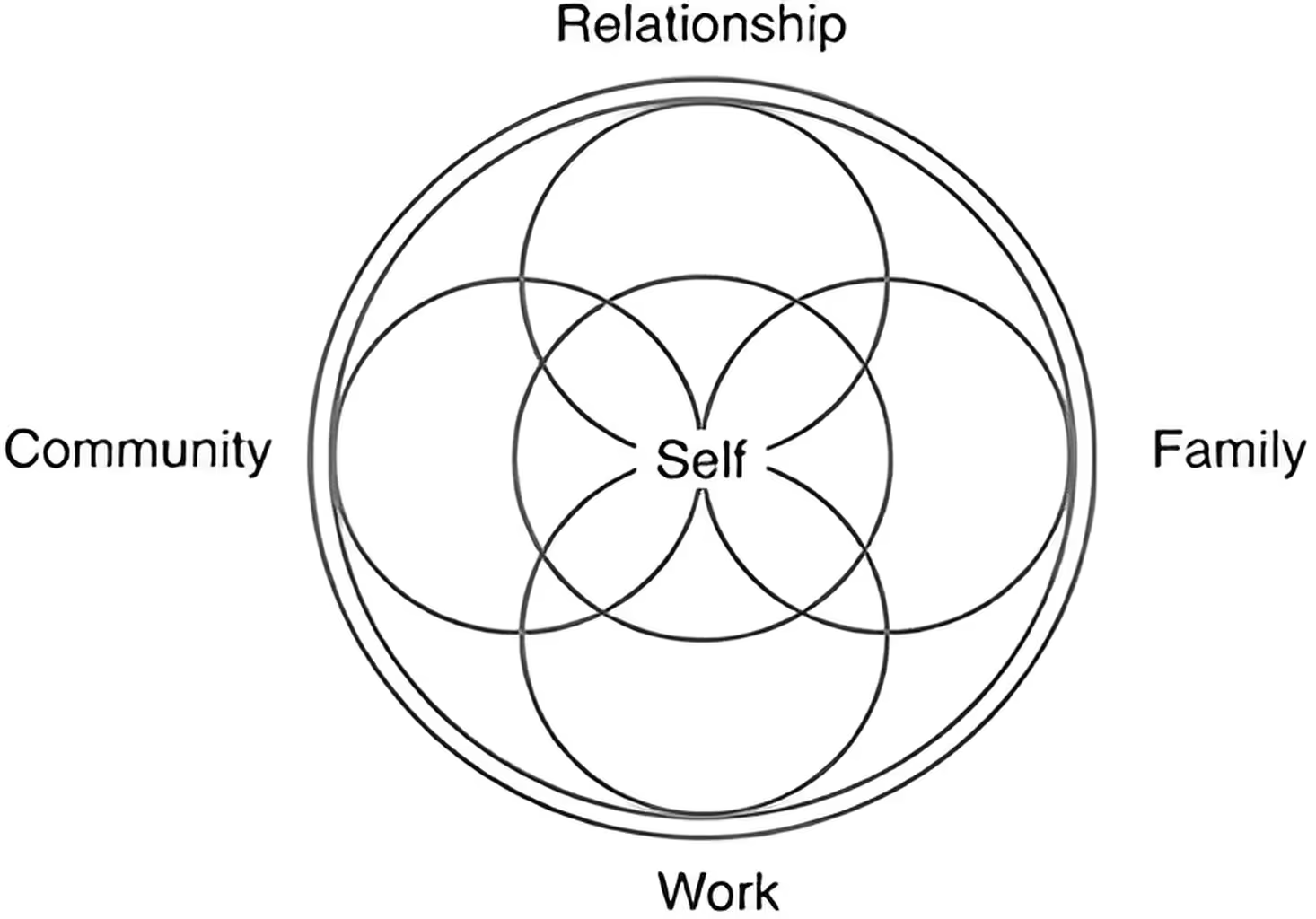
So it’s clear a disconnected approach won’t work. You need a way to bring everything together. This is where Centeredness Theory comes in—offering a model that looks beyond just emotions and goals to consider how all parts of life work together.
Centeredness Theory sees wellbeing as five interlocking spheres with the Self at the center:
- Self - Your personal growth, resilience, and inner state.
- Relationship - The quality of your romantic partnership.
- Family - Your connections with close relatives.
- Work - A sense of purpose and engagement in your career.
- Community - Your social ties and broader sense of belonging.²
Note that if you're not currently in a relationship, you can reflect on past experiences to understand what worked, what didn’t, and what you value in a close connection. Similarly, if you don’t have living relatives or do not communicate with your family, your chosen family—the friends and mentors who support you—can fill this role and provide meaningful connection.
You and your life don’t exist in isolation—you’re part of a larger system that includes your environment and the people around you. That means the key to wellbeing isn’t just self-improvement; it’s building a source of lasting wellbeing that's anchored in each of these spheres.
When your spheres align around a meaningful, forward-looking vision, you move beyond simply fixing what’s broken. Instead, you start creating a life that excites and inspires you.
This is what it means to truly increase your wellbeing—to become more centered.
How Centeredness Spreads: The Three Principles
Wellbeing isn’t just personal—it ripples outward—and science backs this up. Through three science-backed discoveries, your centeredness can become the start of something big that not only changes your life but the lives of those around you.
1. Mutual Uplift
Improvements to wellbeing in one area of life can support your growth in others. To grasp this idea consider that better wellbeing starts with the Self sphere. It’s how we handle life’s challenges, relate to our emotions, access tranquility, and find inspiration.
But we know better wellbeing, or centeredness, doesn’t happen in a bubble. It’s shaped by the context of our lives—the four external spheres. When you make a change in one sphere, it can increase your centeredness in the others.
Any time you gain new skills, feel energized, or find greater compatibility between goals across different spheres, these impacts mutually uplift one another, supporting greater centeredness overall.
For example:
- Gaining a New Skill - Learning better communication skills in the Work sphere—such as active listening or conflict resolution—can strengthen your Family and Relationship spheres. This is because improved communication allows for deeper conversations, fewer misunderstandings, and stronger connections with loved ones.
- Feeling Energized - Finding a physical activity you enjoy in the Self sphere—whether it’s hiking, dancing, or weightlifting—can increase your motivation in the Work sphere. This is because physical vitality leads to sharper focus, increased creativity, and a greater sense of confidence in professional settings.
- Finding Greater Compatibility - Strengthening your sense of belonging in the Community sphere—such as joining a local group or volunteering—can create a sense of fulfillment that carries into your Family and Relationship spheres. This is because a supportive community reinforces your values, which in turn strengthens your closest personal relationships.
Instead of struggling in one area, try looking at how other spheres can support your growth.

2. Positive Spread
Have you ever spent time with a friend only to feel that something about their energy was bringing you down? Or maybe you know someone who seems to effortlessly uplift you whenever they're around. These feelings aren't just in your imagination; science has shown that wellbeing is contagious.
In a 2008 study published by the British Medical Journal, it was discovered that your wellbeing is influenced by people up to three degrees of separation from you.³
This means that if we ignore our wellbeing or allow negative relationships to continue longer than they should, these choices can ripple outward, impacting not only ourselves but those around us. In contrast, when we actively work on improving our wellbeing and nurture positive, fulfilling relationships, we open doors to spread positive effects that elevate everyone within and far beyond our circle.
For example:
- Spreading Wisdom - When you share insights from overcoming a personal challenge, the impact can reach beyond the person you tell. A friend who hears your story might pass along that lesson to someone else facing a similar struggle, extending your wisdom up to three degrees of separation.
- Offering Support - Providing emotional support to a friend during a tough time not only strengthens your bond, but it can also inspire them to be more supportive in their own relationships. Over time, this cycle of care can spread, helping others they interact with feel heard and valued.
- Expressing Love - A simple act of kindness—like showing appreciation or offering encouragement—can shift someone’s mood and inspire them to do the same for others. That small gesture can set off a chain reaction of positivity that travels through friends, coworkers, and even strangers you may never meet.
Your journey toward better wellbeing doesn’t just benefit you—it has a ripple effect that will draw in the people around you.
3. Cascading Growth
Wellbeing can cascade and grow far beyond any one person.
Building on the first two ideas, we see that centered individuals can lead to more centered partnerships, families, workplaces, and communities. This means that groups, such as clubs, organizations, and even societies, can become more centered as overall wellbeing grows.
Here are just a few ways that centeredness can cascade to a larger community:
- Relationship - Imagine a centered relationship, where partners communicate with honesty and mutual respect. As those at their local church take notice, they may adopt similar habits in their own relationships, inspiring centered partnerships in the broader community.
- Family - Picture the centered mother, who nurtures her children with kindness and love. When these children attend school, they'll naturally inspire empathy and kindness in their classmates, creating a more centered school community.
- Work - Envision the centered organization, where employees feel empowered to collaborate in pursuit of an inspiring mission. Over time, the centeredness of that organization's culture will make it a key hub within its community, city, or country, helping to spread centeredness through quality goods, services, and initiatives.
Prioritizing your wellbeing is an empowering act, allowing you to make a real difference in the world.

The Three Strategies for Achieving Centeredness
By now, perhaps you’re sold on Centeredness Theory as a smarter approach to wellbeing. But how do you actually become more centered?
It all comes down to three key strategies, which you can apply across any of your five spheres.
1. Reframing Stress
Stress isn’t always bad—it depends on how you view it.
Research shows that shifting from a “stress-is-debilitating” to a “stress-is-enhancing” mindset can help you use stress as fuel for growth.⁴ When you see stress as a signal rather than a threat, it can push you to develop resilience, take action, and find creative solutions to challenges.
So, instead of avoiding stress, try viewing it as a necessary part of progress. Here are some examples:
- Financial stress
- Stress-is-debilitating: “I’m drowning in debt. I’ll never catch up—why bother trying?”
- Stress-is-enhancing: “This is my chance to take control. I’m going to build a plan, get advice, and turn this around. My future is bright.”
- Difficult conversations
- Stress-is-debilitating: “It’s going to be awkward and uncomfortable. They won’t understand me anyway, so why even try?”
- Stress-is-enhancing: “This conversation might be tough, but it’s a chance to clear the air, understand each other better, and strengthen our relationship. I’m ready to grow from this.”
- Health Scares
- Stress-is-debilitating: “My health is ruined. I’ll never recover—what’s the point in caring now?
- Stress-is-enhancing: “This challenge is my chance to take control and prioritize my wellbeing. I’m ready for a fresh start.”
How can I reframe my current stressors as opportunities for growth?
2. Practicing Mindfulness and Reflection
Mindfulness isn’t just about relaxation; it’s about awareness.
When you stay present and reflect on how your actions impact all five spheres, you make better decisions. Regular reflection helps you recognize patterns in your thoughts and behaviors, allowing you to make intentional choices rather than reactive ones.
Apply mindfulness consistently, and you’ll soon create a habit of self-awareness that leads to better alignment between your actions and values.
For example:
- Being mindful about your daily interactions can help you see how your attitude at work affects your relationships at home.
- Taking time to reflect on a moment of frustration might reveal an underlying issue, like needing more rest or clearer boundaries.
How can I bring more mindful awareness into my daily decisions?
3. Setting Visionary Goals
Not all goals are created equal.
Goals that lead to centeredness start with an exciting vision of who you want to become. Unlike quick fixes, true centeredness is about steady movement toward a life that inspires you. Instead of focusing on temporary relief, this approach builds a lasting foundation for fulfillment.
Centeredness comes from goals that are intrinsically motivated, approach-oriented, and value-aligned.
- Intrinsically motivated goals come from within, driven by what excites and fulfills you, not by what others expect of you.
- Approach-oriented goals focus on moving toward something meaningful rather than avoiding a negative outcome.
- Value-aligned goals connect deeply with your core beliefs, making them more sustainable and rewarding.
For example, setting a goal to grow as a leader is more powerful than a goal to win a promotion. The first is driven by internal growth, moving toward mastery and impact, while the second depends on external standards and may not reflect what truly fulfills you.
Similarly, setting a goal to become a more present and engaged family member will work more effectively than a goal to simply spend less time at work. The first fosters meaningful connection and presence, while the second focuses only on reducing hours without ensuring deeper engagement
The best goals pull you forward and create momentum across multiple spheres of your life. Better yet, when you align your goals with your purpose, the journey becomes as fulfilling as the achievement.
Are my current goals aligned with my core values and long-term aspirations? How can I make them even more meaningful?

The Science Behind Centeredness Theory
Centeredness Theory is backed by multiple fields of science, including but not limited to:
- Systems Theory - Everything in life is interconnected. Your wellbeing doesn’t exist in isolation—it’s shaped by your relationships, work, environment, and personal growth. Change in one area creates ripples across the others.⁵
- Self-Actualization - The drive to become your best self isn’t just about meeting basic needs—it’s about aligning your actions with your deeper purpose and continuously growing toward your full potential.⁶
- Flow Theory - The most fulfilling experiences happen when you’re fully engaged in what you’re doing. Finding flow—where challenge and skill meet—creates energy, focus, and satisfaction in your daily life.⁷
Other theories contributing to Centeredness Theory include the productive personality orientation, Carl Jung’s theory of individuation, chaos theory and fractal geometry, and catastrophe theory.⁸ ⁹ ¹⁰ ¹¹
What this means is that Centeredness Theory isn’t just another pop-psychology trend—it’s a model backed by decades of real science.
A Systems Approach to Wellbeing and Self-Actualization
Most wellbeing models see progress as a step-by-step process but don't explore how different areas of life affect each other. Centeredness Theory changes that by showing how your life works best when everything connects.
Instead of following a rigid path, you can start where it makes the most sense for you, knowing that progress in one area naturally strengthens the others.
- Maslow’s Hierarchy of Needs - Maslow suggested you need to climb a ladder of needs before you’re ready to reach fulfillment. But life isn’t that simple. Centeredness Theory sees wellbeing as something you can build at any stage, no matter your circumstances. A single parent working a tough job can still find deep purpose in caregiving (Family) and community involvement (Community), even if financial stability is a struggle.
- Rogers’ Person-Centered Therapy - Rogers believed that when your life doesn’t match who you truly are, stress and frustration follow. Centeredness Theory takes this further by looking beyond just the Self. If your values (Self) don’t align with your workplace culture (Work) or your career goals clash with family responsibilities, you’ll feel that tension. Adjusting one area can relieve the pressure and bring everything into better balance.
Compared to other wellbeing theories, Centeredness Theory isn’t just about improving how you feel. It's about aligning all areas of life, no matter your current starting point.
Conclusion: Why This Changes Everything
Centeredness Theory shifts the conversation from fixing what’s wrong to building what’s right. Instead of focusing on temporary solutions, it provides a system for creating lasting alignment across all spheres of life.
It’s about optimizing a system that works in harmony.
When you approach your life as an interconnected system, every small improvement feeds into something larger, creating a strong foundation for long-term fulfillment. This means that the key to better wellbeing isn’t about avoiding stress or perfecting self-care routines; it’s about consistently moving toward a life that excites and sustains you.
MAP is the only wellbeing platform built on Centeredness Theory.
In fact, it was created by the very team that discovered and developed the theory. This ensures that every new feature is fully integrated with science as it evolves.
When you use MAP, you’re not just following a wellbeing program—you’re engaging with a cutting-edge ecosystem built from research to real-world application. In just five minutes, MAP’s free assessment will uncover your unique wellbeing profile and show you the four key areas where you can achieve the fastest, most meaningful improvements.
You’ll discover practical, science-backed tools to:
- Strengthen the connections between your goals, values, and daily actions.
- Build momentum toward a life that excites and sustains you.
- Finally experience the wellbeing you’ve been searching for.
Ready to start living a life that truly excites you?
Frequently Asked Questions
Why don’t quick wellbeing fixes work?
Quick fixes like meditation, journaling, or drinking more water can offer short-term relief, but they fail to address the bigger picture. Real wellbeing requires a holistic approach that integrates every part of your life—your Self, Relationship, Family, Work, and Community—as described in Centeredness Theory.
How does wellbeing spread?
Wellbeing spreads through everyday interactions. When you improve your own wellbeing, it naturally influences those around you.
Whether it's sharing wisdom, offering support, or showing kindness, small actions create ripple effects. Science shows that wellbeing can reach people up to three degrees of separation from you—meaning your positive changes could impact friends, family, and even strangers in ways you may never see.
How can I start applying Centeredness Theory today?
Start by assessing your five spheres. Identify areas that feel unbalanced and set meaningful goals aimed at a life that would truly excite you.
The best way to begin is by signing up for a free MAP account. Take the wellbeing assessment and get personalized, step-by-step guidance to help you move toward a life that inspires and sustains you.
References and Further Reading
- Joshanloo, M., Jovanović, V., & Park, J. (2021). Differential relationships of hedonic and Eudaimonic well‐being with self‐control and long‐term orientation. Japanese Psychological Research, 63(1), 47-57.
- Bloch-Jorgensen, Z. T., Cilione, P. J., Yeung, W. W., & Gatt, J. M. (2018). Centeredness theory: Understanding and measuring well-being across core life domains. Frontiers in Psychology, 9, 610.
- Fowler, J. H., & Christakis, N. A. (2008). Dynamic spread of happiness in a large social network: Longitudinal analysis over 20 years in the Framingham Heart Study. British Medical Journal, 337.
- Crum, A. J., Salovey, P., & Achor, S. (2013). Rethinking stress: The role of mindsets in determining the stress response. Journal of Personality and Social Psychology, 104(4), 716-733.
- Meadows, D. H. (2008). Thinking in systems: A primer. Chelsea Green Publishing.
- Maslow, A. H. (1954). Motivation and personality. Harper & Row.
- Csikszentmihalyi, M. (2008). Flow: The psychology of optimal experience. Harper Perennial.
- Fromm, E. (1947). Man for himself: An inquiry into the psychology of ethics. Rinehart.
- Jung, C. G. (1991). The archetypes and the collective unconscious (2nd ed.; R. F. C. Hull, Trans.). Routledge.
- Gleick, J. (2008). Chaos: Making a new science (20th Anniversary ed.). Penguin.
- Poston, T., & Stewart, I. (2012). Catastrophe theory and its applications. Dover Publications.
Related articles