IN THIS ARTICLE
How to Center Yourself When the World Feels Chaotic
Written by
Main Takeaways
- Taking in the chaos of the world often feels stressful, but we have the power to connect to peace and create change.
- Centering yourself starts with small, manageable actions to regain a sense of control.
- Centering yourself is the best way to become an activist for change.
A World in Chaos: Why It Feels Hopeless to Even Try
The world can feel overwhelming. Conflicts, leadership struggles, and economic uncertainty make many of us worry about the future. Younger generations, in particular, feel the weight of financial stress, wondering if they’ll ever catch up. Meanwhile, the environment reminds us daily of the challenges ahead.
With so much going on, it’s easy to feel stuck, unsure of how to make a difference. What’s the point in even trying? How can one person make a difference against such overwhelming forces?
Here’s the truth: You have more power than you think.
As Viktor Frankl once wrote, “Those who have a why to live can bear almost any how.” When you connect with your core values and take aligned action, surprising paths forward begin to reveal themselves.
The journey starts within.
Why Negative News Stories Leave You Feeling Helpless
Our nervous system is wired to react to distressing content, and modern media floods us with it. Research shows that constant exposure to negative news can trigger both mental and physical distress.¹
This can lead to:
- Unwanted memories of upsetting news or events that stick with us.²
- Increased stress that makes it hard to stay calm and focused.³
- Physical signs of stress, like feeling exhausted, tense, or having stomach issues.⁴
But news isn’t just negative—it’s biased toward negativity. Media outlets prioritize alarming stories because fear grabs attention, with studies showing that negative headlines get more clicks and more shares online.⁵ ⁶
In other words, broadcasting bad news is a business model, and it results in a distorted sense of reality where the world seems far worse than it actually is.
Most significantly, repeated exposure to this kind of media can make us feel powerless.⁷ With negative news saturating our televisions and social media feeds, it’s no surprise that many of us feel stuck, struggling to take meaningful action.
Climate anxiety, for example, can inspire action in some cases (e.g., prompting efforts to reduce household waste) but leave others feeling stuck and overwhelmed by the size of the problem.⁸
When problems seem too big to solve, it’s easy to shut down instead of stepping up. So what’s the solution? How do you stay engaged without feeling paralyzed? How do you take action without burning out?
Four Rules of Thumb for Centering Yourself
The phrase “As within, so without” captures a powerful truth: The external world often mirrors our inner world.
When chaos surrounds us, it’s an invitation to examine our core beliefs, values, and reactions. Instead of being consumed by external noise, we can use it as fuel for clarity and transformation. But where do we start?
The following four rules of thumb offer a powerful path forward.

1. Use Global Issues to Reveal What Drives You
You can’t let external problems dictate your purpose. Instead, use the challenges of the world as a signal—a mirror reflecting where your deepest calling lies.
Rather than getting lost in the noise, ask yourself: What issues spark the strongest emotions in me? The key is to treat these emotions not as mandates but as indicators, pointing you toward the areas where you’re most equipped to contribute.
MAP’s "Reflect on What Energizes You" exercise helps you tap into these insights. It guides you in clarifying what truly moves you. This way, your efforts align with your values and strengths, creating lasting impact.
This exercise isn’t just about self-discovery—it’s a bridge between understanding yourself and taking meaningful action in the world. By uncovering what energizes and drives you, you’ll have taken the first step toward aligning your daily actions with a larger purpose.
2. Align Actions With Your Values, No Matter How Small
Once you’ve clarified your values, it’s time to take action. But where to begin?
Small, values-driven actions can be transformative. When you act in ways that align with your values, you push back against the “spirit” of larger problems—whether that’s corruption, greed, or destruction.
Real change starts small and grows as your skills, confidence, and opportunities increase. This means that humility is key.
Imagine someone whose personal life is a whirlwind of chaos—unpaid bills, strained relationships, and health issues. Trying to tackle global problems like climate change or social inequality would be like trying to fly a plane before you'd even learned to drive.
Before you can make meaningful change in the world, you need to start by getting your own house in order. Small, steady steps within your immediate environment create the foundation for broader, impactful action.
Similarly, avoid mistaking noise for action. Posting angry rants online or blaming institutions without taking tangible steps won’t create meaningful change. Focus on what you can do, not just what you say.
Concrete action beats demonizing the world without stepping up to make a difference.
3. Start with Your Immediate Environment
Centeredness Theory’s five spheres—Self, Relationship, Family, Work, and Community—offer a roadmap for change. This is because global issues often have local reflections:
- If corruption frustrates you, are there relationships where you feel powerless? Perhaps with a partner or parent? Start there.
- If environmental destruction concerns you, ask how you can live more sustainably in your household.
- If global inequality angers you, consider how you can foster fairness in your workplace or community.
By starting with what’s closest to you, you create ripples that extend outward. Small actions build momentum, leading to larger change over time.
4. Discern Between What You Can and Can’t Control
As you take steps on your journey, you’ll need to avoid the pitfalls of burnout and feeling overwhelmed. The key here is to remain clear about what you can vs. cannot control.
In MAP, you'll complete a step-by-step exercise to pinpoint what’s within your control and where your energy is best spent.
The exercise starts by reflecting on a recent situation that caused you stress or frustration. For example, imagine being on a tight budget and reading a news story about unfair price hikes at your local grocery store; it leaves you feeling powerless and stressed.
Next, you’ll separate the factors in the situation into two lists:
- What You Can’t Control - broader economic conditions or corporate decisions behind the price hikes.
- What You Can Control - your response—such as planning meals to reduce waste, exploring alternative stores, or changing your financial habits.
By focusing on what’s in your hands, you regain a sense of control and steady progress. (And the next time a similar stress arises, you’ll know how to handle it more effectively.)
Practice this enough, and you’ll soon prove to yourself that starting small and feeling empowered is far more impactful than staying stuck in overwhelm.
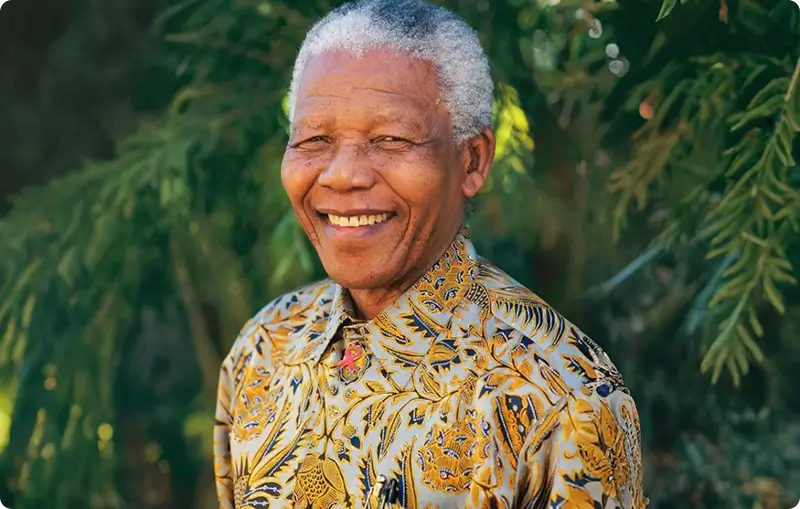
Nelson Mandela: The Power of Centering Yourself from the Inside Out
Let me guess. You're wondering if these small steps can truly give you a leg-up on your life's problems—let alone make a difference to the world around you.
Allow me to answer your question by drawing on a great story of inspiration.
Consider Nelson Mandela, a revolutionary leader and advocate for equality during South Africa's apartheid. Nelson was wrongly imprisoned for decades under harsh conditions, but he refused to give in to despair.
He chose to focus on the one thing he could control: himself.
Nelson Mandela used his time in prison as an opportunity to develop strength, purpose, and leadership:
- Building Bridges - He fostered communication and understanding between prisoners and guards, showing respect and seeking common ground.
- Educating Others - He organized informal classes for fellow inmates, sharing knowledge and skills to uplift the group.
- Maintaining Dignity - Through small daily rituals, such as maintaining his appearance, he preserved a sense of dignity and purpose.
Before Nelson, the prison was marked by hostility and hopelessness. Afterward, it became a space of unexpected resilience and growth, with prisoners and even some guards inspired by his example.
This story reminds us that profound change begins within. When enough people take this approach—starting small, focusing on their immediate environment, and growing their skills and confidence—the ripple effects can become waves of transformation.
Trust the process: humility and steady action have the power to shape not just your life, but the world around you.
Becoming the Still Point in the Noise
Choosing to center yourself in a chaotic world is an act of bravery. By taking aligned, meaningful action within your spheres, you create a ripple effect that can change lives.
And if enough people make this choice? Those ripples build into waves of change, transforming the tide of human history.
Ready to become the still point in the noise? Start your journey with MAP today.
Frequently Asked Questions
What happens to your mind and body when you watch too much negative news?
Watching too much negative news can make you feel more anxious, stressed, and overwhelmed. It can also lead to unwanted thoughts that are hard to shake off and even cause physical issues like headaches, muscle tension, or trouble sleeping.
Understanding these effects can help you make better choices about how to stay informed without feeling drained.
How can I stop feeling so stressed about everything happening in the world?
Focus on what’s in your control. Taking small steps in your own life that align with your values can make a big difference in how you feel. Instead of getting lost in big global issues, look for ways to make positive changes in your community or personal life.
How can MAP help me stay balanced when the world feels chaotic?
MAP helps you understand what really matters to you and gives you tools to take meaningful action. It provides reflection exercises, daily reminders, and practical steps to keep you focused and grounded, no matter what’s happening around you.
References and Further Reading
- Seleznov, I. (2018). Shifts in the autonomic nervous system defined by the valence of TV news. Current Issues of Mass Communication, 2018(24), 8-21.
- Das, R. K., Tamman, A., Nikolova, V., Freeman, T. P., Bisby, J. A., Lazzarino, A. I., & Kamboj, S. K. (2016). Nitrous oxide speeds the reduction of distressing intrusive memories in an experimental model of psychological trauma. Psychological Medicine, 46(8), 1749-1759.
- Weidmann, A., Conradi, A., Gröger, K., Fehm, L., & Fydrich, T. (2009). Using stressful films to analyze risk factors for PTSD in analogue experimental studies–which film works best? Anxiety, Stress, & Coping, 22(5), 549-569.
- McLaughlin, B., Gotlieb, M. R., & Mills, D. J. (in press). Problematic news consumption and its relationship to mental and physical health: A replication study. Health Communication.
- Robertson, C. E., Pröllochs, N., Schwarzenegger, K., Pärnamets, P., Van Bavel, J. J., & Feuerriegel, S. (2023). Negativity drives online news consumption. Nature Human Behaviour, 7(5), 812-822.
- Watson, J., van der Linden, S., Watson, M., & Stillwell, D. (2024). Negative online news articles are shared more to social media. Scientific Reports, 14, 21592.
- Grossekemper, L. (2023). Sex differences and helplessness in climate change doomscrolling [Bachelor's thesis, University of Twente]. University of Twente Repository.
- Clayton, S. (2020). Climate anxiety: Psychological responses to climate change. Journal of Anxiety Disorders, 74, 102263.
Related articles