
IN THIS ARTICLE
Why Meditation is For Everyone
Written by
Main Takeaways
- Meditation helps anyone find clarity, balance, and resilience—no spiritual background required.
- Science shows meditation changes the brain, improving memory, creativity, emotional balance, and more.
- Meditation isn’t just for stress relief—it’s a tool for deep self-awareness and lasting personal growth.
How Meditation Went Mainstream
Look around, and you’ll see meditation isn’t just for monks or yoga lovers anymore. These days, you might spot a CEO using meditation with a mindfulness coach or hear an athlete crediting meditation for a big win. Meditation programs are even popping up in surprising places like primary schools and prisons.
So, what does this change mean?
It shows that meditation is now a tool for everyone. No matter who you are, you can use it to find clarity, balance, and strength in everyday life. In this article, you’ll discover why meditation is so popular, how it changes your brain, and how MAP can help you start your own meditation journey.
A Brief History: Meditation’s Journey West
Meditation has been around for thousands of years, beginning in spiritual traditions like Buddhism and Hinduism. For a long time, people believed it was only for those seeking spiritual enlightenment or a deep connection to something greater. But in the 1960s and 70s, meditation made its way West.
At that time, meditation became popular among people looking for new ways to think and live. But back then, many saw meditation as mystical or strange. This made it hard for those who preferred practical, science-based approaches to connect with it.
As the years passed and society became focused on technology and material success, meditation faded from the spotlight. But today, it’s making a big comeback. Thanks to science proving its many benefits, meditation is celebrated not just as a spiritual practice but as a powerful tool for mental and emotional wellbeing.
Modern Misunderstandings of Meditation
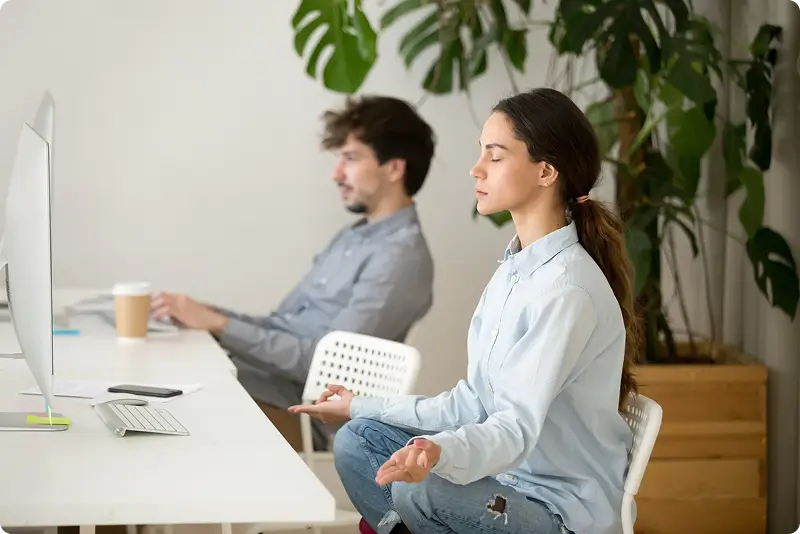
While meditation is now mainstream, it’s still widely misunderstood. Many popular mindfulness apps make it sound like a quick fix for stress, offering “5-minute meditations” or promising to help users “relax fast.”
This oversimplification has drawn criticism from experts like Ronald Purser, author of McMindfulness: How Mindfulness Became the New Capitalist Spirituality. Ronald argues that these portrayals miss the true depth of meditation. Instead of being marketed as a powerful tool for personal growth, meditation is often treated like a quick Band-Aid for stress.¹
He also points out that this focus on fast stress relief takes meditation out of its deeper context. It becomes a way to cope with unhealthy situations instead of inspiring meaningful change.
Reducing stress is just the tip of the iceberg when it comes to meditation’s potential benefits in your life.
The True Promise of Meditation
So if meditation isn’t about stress relief or brute-forcing your way through tough times, what’s it really for?
Here's the truth: Meditation is for gaining insight into the nature of consciousness, self, and reality.
When you truly learn to meditate, you gain a new perspective on your challenges. It’s like adjusting the settings on a sound system—turning down the noise of stress and turning up serenity and balance. Life doesn’t necessarily become easier, but it feels more harmonious, like a well-tuned melody where you have more control over how you experience each note.
Better yet, the practice grants you a state of awareness where you’re no longer lost in thought or chasing happiness outside of you.
Instead, you begin to experience life fully, directly, and with a sense of inner peace—you become less affected by inevitable ups and downs. This shift helps you become more present, more compassionate, and better able to navigate life’s complexities with calm clarity.
The easiest way to understand this is to think of meditation like maintaining a healthy body through diet and exercise. Just as physical fitness makes everything in life easier—from climbing stairs to managing stress—mental fitness through meditation enhances your emotional resilience, focus, and creativity.² ³ ⁴
It's a practice that supports all aspects of your life.
What Brain Science Tells Us About Meditation
Thanks to new research using brain scanning tools like EEG and fMRI, we now know that meditation doesn’t just feel good—it changes your brain.
Studies show that people who meditate have different brain activity compared to those who don’t.⁵ In simple terms, a stressed-out person and a peaceful monk behave differently because their brains process emotions and thoughts in distinct ways.⁶
Your brain may handle stress by reacting quickly and feeling overwhelmed. But someone who meditates processes the same situations through calmer, more focused pathways. This is why meditation helps your brain become better at handling life’s ups and downs without getting stuck in negative reactions.
But let’s break this down: How do these brain changes from meditation actually improve your daily life?
Fewer Negative Thought Spirals
Mind-wandering might seem harmless, but it can affect how you feel and think. When your mind wanders, the default mode network (DMN)—the part of your brain that handles self-reflection—becomes too active. This overactivity is linked to worry and stress.
When this happens, you might find yourself stuck in negative thought loops—replaying mistakes or worrying about things that haven’t happened yet. For example, you could spend hours thinking about a work error or doubting yourself after an argument. These thoughts leave little room for clear thinking or creativity.
The good news? Meditation helps. A study by Brewer and his team discovered that people who meditate regularly have less DMN activity, which means fewer distractions and clearer focus.⁷ With practice, your mind learns to stay present, just like muscles get stronger with exercise. Over time, you’ll spend less time stuck in negative thoughts and more time feeling calm, confident, and ready for what comes next.

Increased Creativity
Meditation boosts creative thinking by increasing alpha waves in the brain.⁸ These brain waves help you think outside the box and solve problems in new ways. When your brain produces more alpha waves, it becomes easier to see challenges from fresh angles and come up with creative solutions. This makes meditation a powerful tool for success in both your personal and professional life.
In a 2012 study, researchers discovered that open-monitoring meditation—a style where you observe your thoughts and feelings without judgment—improved creative thinking. People who practiced this type of meditation did better on tasks that required original ideas and innovative solutions compared to those who didn’t meditate.⁹
A real-life example of this comes from Michael Singer’s story in The Surrender Experiment. Through meditation, he experienced creative breakthroughs that transformed his career, leading to major innovations in the software industry.¹⁰
Imagine applying this level of clarity and creativity to your own challenges—whether in work, relationships, or personal growth. Meditation doesn’t just calm the mind; it opens the door to new possibilities.
Balanced Thinking and Creativity
Your brain works best when its parts communicate smoothly. The corpus callosum, a thick band of nerves connecting the left and right sides of your brain, acts like a superhighway, helping logic and creativity work together.
Research has shown that meditation strengthens this connection, making it easier for your brain to solve problems by blending creative thinking with practical solutions.¹¹ This means meditation doesn’t just help you come up with creative ideas—it helps you translate them into action.
Picture coming up with an exciting project idea at work and knowing exactly how to make it happen. Or imagine staying focused during tasks, and adapting quickly when things don’t go as planned. Meditation unlocks your ability to think creatively and clearly at the same time, giving you the mental tools to navigate life with confidence.
Improved Memory and Learning
Meditation boosts the growth of new brain cells in the hippocampus—the part of your brain that handles memory and learning.¹² With a stronger hippocampus, you can remember things more easily and learn new skills faster. Science shows that regular meditation keeps this part of the brain healthy, so you stay sharp no matter your age.¹³
This matters because a sharp memory helps you stay on top of daily tasks and big goals. You’ll be able to remember important details, pick up new hobbies, and feel confident tackling complex challenges. Meditation turns your brain into a learning machine—ready to take on whatever comes your way.
Imagine remembering a friend’s birthday without checking your calendar or learning a new language without feeling overwhelmed. Meditation keeps your mind strong, flexible, and ready for anything, helping you hold onto what truly matters.
Better Emotion Regulation and Decision-Making
Meditation helps calm the part of your brain called the amygdala, which handles strong emotions like fear and anger.¹⁴ Richard Davidson, a neuroscientist who worked with the Dalai Lama, discovered that when you meditate, the amygdala becomes less active and even shrinks.¹⁵ This means you’re less likely to overreact when things don’t go your way.
At the same time, meditation strengthens the prefrontal cortex—the part of your brain that helps you make smart decisions and stay in control.¹⁶ Science has shown that meditation boosts gray matter in this area, which is a good thing; more gray matter means clearer thinking and stronger emotional balance.¹⁷
When the amygdala and prefrontal cortex work better together, it’s like having a brake that slows down emotional outbursts, making it easier to stay calm, even when life gets tough. Together, these changes create a brain that’s better at staying steady when faced with challenges, giving you the ability to pause, reflect, and respond wisely rather than reacting impulsively.

Meditation as a Path to the Self
Centeredness Theory teaches us that meditation reconnects us with our inner compass.¹⁸ Many of us live lives influenced by outside pressures—like what society expects, constant distractions, or habits that numb how we truly feel. This can leave us feeling disconnected from who we really are.
One of the core subdimensions of Centeredness Theory’s Self sphere is Awareness. If life were a big maze, Awareness would be the map that helps us find our way. Meditation sharpens this awareness by encouraging us to slow down and ask important questions like, “How do I truly feel?” or “Are my choices reflecting what matters most to me?” These questions help us recognize areas where life feels off and give us the clarity to make better decisions.
Through this process, meditation shines a light on hidden emotions and values. It helps turn feelings of confusion or dissatisfaction into clear actions, guiding you toward a life that feels meaningful.
For example, meditation can reveal whether the goals you’re chasing are genuinely yours or if they’re shaped by what others expect. It also shows if you’re setting goals based on what you truly want or simply avoiding things you fear. By combining meditation with smart goal-setting, you can align your actions with your inner values and create a life that feels both fulfilling and true to you.
Why You Don’t Have to Meditate Alone
Starting a meditation practice can feel overwhelming, but you don’t have to do it alone—MAP gives you valuable support for understanding the insights that meditation can reveal.
From helping you identify new values and emotions to offering personalized roadmaps for change, MAP ensures your meditation journey is supported at every step:
- Personalized Insights - Begin with MAP’s wellbeing assessment to uncover what matters most to you.
- Guided Activities - Use MAP’s activities to process what you discover during meditation—new values, emotions, or insights.
- Ongoing Guidance - Access a coach-like experience that provides personalized support and helps you stay consistent.
Meditation is a journey, and with the right tools and guidance, it can transform your life. By integrating meditation insights with MAP’s support, you’ll gain clarity, align with your values, and take meaningful steps toward a more fulfilling future.
Meditation is for everyone—and with MAP, it can be for you too. Take the first step today.
Frequently Asked Questions
How do I start meditating if I’m new?
Start small and keep it simple. Sit quietly for five minutes a day. Focus on your breath, and when your mind wanders, gently bring your attention back. You don’t need special equipment or a perfect space—just a few quiet moments to yourself. Over time, you can build up to longer sessions as it becomes part of your daily routine.
What are the long-term benefits of meditation?
Meditation helps you stay calm, focused, and confident. It boosts memory, sharpens creativity, and improves emotional balance. It also strengthens connections between different parts of your brain, helping you think more clearly and respond to challenges thoughtfully.
Over time, meditation supports better decision-making and greater self-awareness, making everyday life feel more manageable and fulfilling.
Can meditation really change my brain?
Yes. Research shows that meditation changes your brain in powerful ways. It increases gray matter in areas that control memory and emotions and strengthens the connections between them. It also reduces activity in the amygdala, the part of your brain responsible for fear and stress, while strengthening the prefrontal cortex, which helps with decision-making.
These changes make it easier to stay calm, think clearly, and respond to life’s challenges with confidence.
References and Further Reading
- Purser, R. E. (2019). McMindfulness: How mindfulness became the new capitalist spirituality. Repeater Books.
- Brown, K. W., & Ryan, R. M. (2003). The benefits of being present: mindfulness and its role in psychological well-being. Journal of Personality and Social Psychology, 84(4), 822-848.
- Chambers, R., Lo, B. C. Y., & Allen, N. B. (2008). The impact of intensive mindfulness training on attentional control, cognitive style, and affect. Cognitive Therapy and Research, 32, 303-322.
- Shetkar, R. M., Hankey, A., Nagendra, H. R., & Pradhan, B. (2019). Association between cyclic meditation and creative cognition: Optimizing connectivity between the frontal and parietal lobes. International Journal of Yoga, 12(1), 29-36.
- Falcone, G., & Jerram, M. (2018). Brain activity in mindfulness depends on experience: A meta-analysis of fMRI studies. Mindfulness, 9(5), 1319-1329.
- Josipovic, Z., Dinstein, I., Weber, J., & Heeger, D. J. (2012). Influence of meditation on anti-correlated networks in the brain. Frontiers in Human Neuroscience, 5, 183.
- Brewer, J. A., Worhunsky, P. D., Gray, J. R., Tang, Y. Y., Weber, J., & Kober, H. (2011). Meditation experience is associated with differences in default mode network activity and connectivity. Proceedings of the National Academy of Sciences, 108(50), 20254-20259.
- Lustenberger, C., Boyle, M. R., Foulser, A. A., Mellin, J. M., & Fröhlich, F. (2015). Functional role of frontal alpha oscillations in creativity. Cortex, 67, 74-82.
- Colzato, L. S., Szapora, A., & Hommel, B. (2012). Meditate to create: The impact of focused-attention and open-monitoring training on convergent and divergent thinking. Frontiers in Psychology, 3, 22970.
- Singer, M. A. (2015). The surrender experiment: My journey into life's perfection. Harmony.
- Luders, E., Phillips, O. R., Clark, K., Kurth, F., Toga, A. W., & Narr, K. L. (2012). Bridging the hemispheres in meditation: Thicker callosal regions and enhanced fractional anisotropy (FA) in long-term practitioners. Neuroimage, 61(1), 181-187.
- Hölzel, B. K., Carmody, J., Vangel, M., Congleton, C., Yerramsetti, S. M., Gard, T., & Lazar, S. W. (2011). Mindfulness practice leads to increases in regional brain gray matter density. Psychiatry Research: Neuroimaging, 191(1), 36-43.
- Last, N., Tufts, E., & Auger, L. E. (2017). The effects of meditation on grey matter atrophy and neurodegeneration: A systematic review. Journal of Alzheimer's Disease, 56(1), 275-286.
- Kral, T. R., Schuyler, B. S., Mumford, J. A., Rosenkranz, M. A., Lutz, A., & Davidson, R. J. (2018). Impact of short-and long-term mindfulness meditation training on amygdala reactivity to emotional stimuli. Neuroimage, 181, 301-313.
- Gotink, R. A., Vernooij, M. W., Ikram, M. A., Niessen, W. J., Krestin, G. P., Hofman, A., ... & Hunink, M. M. (2018). Meditation and yoga practice are associated with smaller right amygdala volume: The Rotterdam study. Brain Imaging and Behavior, 12, 1631-1639.
- Davidson, R. J., & Begley, S. (2012). The emotional life of your brain: How its unique patterns affect the way you think, feel, and live--and how you can change them. Hudson Street Press.
- Tang, Y. Y., Hölzel, B. K., & Posner, M. I. (2015). The neuroscience of mindfulness meditation. Nature Reviews Neuroscience, 16(4), 213-225.
- Bloch-Jorgensen, Z. T., Cilione, P. J., Yeung, W. W., & Gatt, J. M. (2018). Centeredness theory: Understanding and measuring well-being across core life domains. Frontiers in Psychology, 9, 610.
Related articles